True property value isn’t just built, it’s unlocked; the biggest ROI comes from identifying and solving legal and planning puzzles that other buyers miss.
- Sellers often undervalue « paper » potential like planning consent, leaving a quantifiable value gap for savvy investors to capture.
- Identical properties can have vastly different development rights due to micro-zoning like Article 4 Directions, creating arbitrage opportunities.
Recommendation: Shift your focus from purely physical inspections to forensic, desk-based due diligence to find these hidden opportunities before making an offer.
Every investor dreams of finding that undervalued property, the hidden gem with the potential for explosive capital growth. The common wisdom directs the search toward cosmetic fixes: tired kitchens, outdated bathrooms, and overgrown gardens. We’re taught to « buy the worst house on the best street » and profit from a straightforward refurbishment. This approach has its merits, but it overlooks a far more lucrative, and largely invisible, layer of value.
What if the real £100,000 of hidden value wasn’t in the bricks and mortar, but in the paperwork? The most sophisticated investors know that true redevelopment upside lies in spotting and solving the planning, legal, and environmental complexities that scare off average buyers. This isn’t about wielding a sledgehammer; it’s about forensic analysis. It’s about generating « paper profit » by transforming an un-mortgageable, misunderstood, or restricted asset into a prime, de-risked development opportunity before a single brick is laid.
This entrepreneurial approach requires a new lens. You must learn to see value where others see only problems: a restrictive covenant, a complex planning history, or an ambiguous environmental report. This guide provides the analytical framework to do just that. We will dissect how to evaluate everything from roof extension rights and change of use potential to the critical impact of environmental regulations and local planning quirks that can make or break your investment thesis.
To navigate this complex landscape, this article breaks down the core analytical pillars for identifying hidden value. The following sections will provide a detailed roadmap, equipping you with the strategic insights needed to uncover opportunities that others overlook.
Summary: A Strategic Guide to Uncovering Redevelopment Potential
- Why Sellers Miss £100k Redevelopment Value That Savvy Buyers Capture?
- How to Evaluate Roof Extension Rights Before Making an Offer?
- Change of Use or Extension: Which Adds More Value for £50k Investment?
- The Environmental Report Error That Halts Your Development Plans
- When to Begin Redevelopment Given Current Construction Cost Inflation?
- Why Identical Buildings Have Different Development Rights by Postcode?
- Why a £20k Refurb Can Add £50k to Your Property Value Overnight?
- How to Build 50% Equity in 10 Years Instead of 20?
Why Sellers Miss £100k Redevelopment Value That Savvy Buyers Capture?
Sellers, particularly those who have lived in a property for a long time, often suffer from information asymmetry and emotional attachment. They see their home, not the development asset it could be. They are frequently unaware of the latent value locked within their property’s planning potential, such as the right to extend, convert the loft, or even split the title. This creates a significant « value gap » between the seller’s asking price and the property’s true potential market value post-development or with planning consent secured. The savvy buyer’s first job is to quantify this gap.
The value of planning permission itself is substantial, acting as a form of value de-risking. It removes uncertainty and transforms an abstract possibility into a concrete, bankable asset. Research confirms that gaining planning permission adds a significant premium, even before any construction work begins. For instance, data from Home Sale Pack shows an 11% average premium, which translates to over £47,000 on the average UK house. This uplift is purely « paper profit » captured by the investor who undertakes the planning groundwork.
The entrepreneurial investor thrives on this inefficiency. While the average buyer is deterred by the perceived complexity and cost of the planning process, the analytical investor sees it as the primary mechanism for forcing appreciation. They are not just buying a property; they are acquiring an opportunity to solve a puzzle that the previous owner didn’t know existed or was unwilling to tackle. This mindset shift from passive homebuyer to active value creator is the fundamental difference that captures tens, or even hundreds, of thousands of pounds in hidden equity.
How to Evaluate Roof Extension Rights Before Making an Offer?
The roof and loft space are often the most straightforward sources of redevelopment upside, yet they are fraught with hidden restrictions. Simply seeing a large, unconverted loft is not enough. A forensic, desk-based due diligence process must be conducted before an offer is even considered. The key is to verify what is possible under Permitted Development (PD) rights versus what would require a full planning application, as the risk and cost profiles are vastly different.
Your investigation should focus on constraints that can nullify standard PD rights. The most common and impactful of these is an Article 4 Direction. Local authorities use these to remove PD rights in specific areas, often conservation areas, to protect local character. A property subject to an Article 4 Direction may look identical to one on the next street, but its development potential is drastically curtailed, requiring full planning permission for even minor changes. This is a classic example of where planning arbitrage can be found at the borders of these zones.

Beyond Article 4, you must also check the property’s title register for restrictive covenants, which are private legal agreements that can prohibit extensions or alterations, regardless of council planning policy. Finally, analysing the planning history of neighbouring properties provides invaluable precedent, showing what the local authority has deemed acceptable in the recent past for similar structures. This pre-offer analysis separates speculators from serious investors.
Your Action Plan: Permitted Development Rights Investigation
- Contact the local planning authority to check if the property is subject to an Article 4 Direction that removes standard permitted development rights.
- Search the council’s online planning portal for any Article 4 Directions affecting the specific street or conservation area.
- Review the planning history of neighbouring properties to identify precedents for roof extensions, dormers, or hip-to-gable conversions.
- Verify whether the property falls within a Conservation Area or Area of Outstanding Natural Beauty, which may restrict development.
- Check the title register for restrictive covenants that may prohibit extensions regardless of planning permissions.
Change of Use or Extension: Which Adds More Value for £50k Investment?
Once you’ve identified a property with potential, the next strategic decision is how to deploy capital for maximum impact. With a hypothetical £50,000 budget, should you build an extension or pursue a change of use (e.g., converting a single house into multiple flats)? The answer depends entirely on your investment strategy, local market demand, and planning risk appetite. This is not a one-size-fits-all question; it’s a calculated trade-off between different types of value creation.
An extension typically adds gross internal area (GIA) and appeals to the owner-occupier market, enhancing a property’s utility as a single-family home. A change of use, conversely, targets the rental and investor market by multiplying the number of income-generating units. While research shows that planning permission for a change of use can add up to 30% to a property’s value, compared to 15% for an extension, it often carries higher complexity around building regulations, soundproofing, and amenity standards for each new unit.
The table below outlines a financial comparison framework to guide this decision. It highlights the critical differences in potential uplift, project duration, planning risk, and target market. For a £50k budget, an extension might be a small rear addition, whereas for a change of use, that same budget could cover the internal configuration and compliance costs for creating two small studio flats, assuming the initial structure is suitable. The choice fundamentally alters the asset class you are creating.
| Factor | Extension (e.g., Rear/Side) | Change of Use (e.g., House to Flats) |
|---|---|---|
| Potential Value Added | Up to 15% | Up to 30% |
| Typical Project Duration | 12-18 months | 6-9 months (if permitted development) |
| Planning Risk Level | Medium (subject to Article 4 & local policy) | Medium-High (EPC, natural light, vacancy requirements) |
| Capital Required (£50k budget) | Covers small to medium extension | Covers conversion & compliance costs for 2-3 units |
| End Use Flexibility | Single dwelling (owner-occupier market) | Multiple units (investor/rental market) |
The Environmental Report Error That Halts Your Development Plans
In the past, environmental reports were often a checkbox exercise in property transactions. Today, they represent one of the most significant and frequently underestimated risks to any redevelopment project. A seemingly minor error or omission in assessing a site’s ecological constraints can lead to catastrophic delays, redesigns, and budget overruns. This has become a critical area of due diligence, especially with the introduction of new, stringent legislation.
The most impactful recent change is the mandatory Biodiversity Net Gain (BNG) framework. As highlighted in a UK Parliament briefing, since February 2024, most new developments in England must deliver a 10% minimum biodiversity uplift. This means a developer cannot simply build; they must prove their project will leave the natural environment in a measurably better state. Failing to account for BNG from day one is a rookie error that can halt a project in its tracks. If the site contains irreplaceable habitats or protected species, meeting this 10% gain on-site may be impossible, requiring costly off-site contributions or even rendering the project unviable.
This creates a new form of environmental liability that must be assessed pre-acquisition. An investor must ask: What is the baseline biodiversity value of this site? Can a 10% gain be achieved within the project’s footprint and budget? Ignoring these questions is a gamble. The risk is not just theoretical; it’s a practical challenge facing local authorities and developers right now.
Case Study: The BNG Capacity Gap
A 2024 survey by the Royal Town Planning Institute (RTPI) exposed a critical weakness in the system. It revealed that 41% of local planning authorities were concerned about their lack of sufficient in-house ecological expertise to effectively manage and enforce the new BNG requirements. This capacity gap directly translates to uncertainty and delays for developers. A project with a poorly conceived BNG strategy can get stuck in the planning system for months as under-resourced council departments struggle to validate the submitted data, creating a significant holding cost for the investor.
When to Begin Redevelopment Given Current Construction Cost Inflation?
Identifying a property with redevelopment potential is only half the battle. The other half is timing the execution. In an environment of volatile construction costs, the decision of *when* to start building becomes as critical as *what* to build. Kicking off a project at the peak of a cost cycle can erode your entire profit margin, while delaying could mean missing a market window. This requires a strategic, data-driven approach rather than an emotional rush to get started.
The hard data on construction costs paints a challenging picture for developers. Looking ahead, the Building Cost Information Service (BCIS) forecasts a further 15% increase in construction costs by 2030, driven by both labour and material price hikes. This isn’t a short-term blip; it’s a long-term trend that must be factored into your financial modelling. An investor acquiring a site today must stress-test their appraisal against these projected increases. A project that looks profitable based on today’s build costs may be underwater by the time it gets through planning and is ready to start on site.
This inflationary pressure forces a more strategic view of the development timeline. As Dr David Crosthwaite, Chief Economist at BCIS, noted:
2025 will likely be another difficult year for construction with only minimal output growth evident before growth accelerates later in the forecast period.
– Dr David Crosthwaite, Chief Economist at BCIS
This suggests a potential strategy: use the immediate future (2024-2025) to focus on securing valuable planning consents—the « paper profit » phase—while deferring capital-intensive construction until cost pressures potentially stabilize or market values have risen sufficiently to absorb the higher build costs. This active waiting game is a hallmark of an experienced developer.

Why Identical Buildings Have Different Development Rights by Postcode?
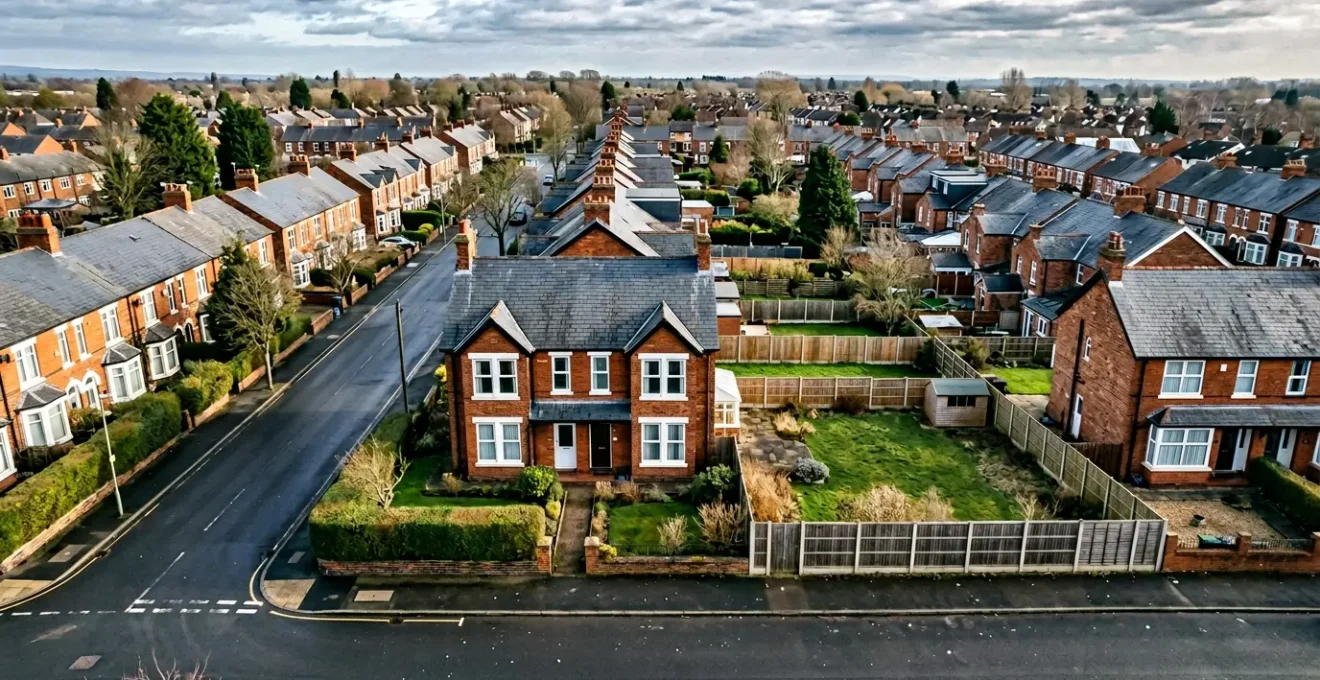
One of the most powerful but misunderstood concepts in UK property development is that development rights are not inherent to a building itself, but are granted—and can be taken away—based on its precise location. Two identical Victorian houses, standing side-by-side but separated by a borough boundary line or the edge of a conservation area, can have wildly different development potential. This geographic lottery is the essence of planning arbitrage.
The primary mechanism for this is the Article 4 Direction. As the Royal Borough of Kensington and Chelsea’s guidelines explain, an Article 4 direction allows a local authority to withdraw specific permitted development rights across a defined area. This is often done to preserve architectural character, but it has profound financial consequences. It means that an extension or conversion that could be done under PD in one postcode requires a full, costly, and uncertain planning application in another.
The savvy investor actively hunts for properties on the « right » side of these invisible lines. They use council mapping tools to identify the exact boundaries of Article 4 zones, conservation areas, and other policy overlays. Finding a property just outside a restricted zone, which often suffers from a perceived blight by association, can be a source of immense value. You gain the benefit of the desirable location without the punitive planning restrictions.
Case Study: The Kensington Basement Arbitrage
A prime example of this micro-zoning is the Article 4 Direction for basement extensions implemented by Kensington and Chelsea Council. On 28 April 2016, the council removed permitted development rights for the excavation of basements across the entire borough. This means a house within the RBKC boundary requires full planning permission for a basement, a notoriously difficult process. However, an identical house just across the boundary in a neighbouring borough might still retain these rights. This single, location-based policy difference can represent a value gap of hundreds of thousands of pounds in potential GIA, creating a clear arbitrage opportunity for an investor who understands local planning policy at a granular level.
Why a £20k Refurb Can Add £50k to Your Property Value Overnight?
The most impactful refurbishments are not about aesthetics; they are about solving problems that limit a property’s marketability or mortgageability. A strategic £20,000 investment can add £50,000 or more to the end value because it removes a fundamental objection for a buyer or, more importantly, a mortgage lender. This is where analytical investment dramatically outperforms simple cosmetic upgrades.
Consider a property that is « un-mortgageable »—perhaps because it has no functioning kitchen or bathroom, or has a structural issue a lender will not approve a loan against. An average buyer requiring a mortgage cannot purchase it, shrinking the pool of potential buyers to cash-only investors. This drastically suppresses its market price. A £20k investment to install a basic kitchen and bathroom or fix the specific structural issue instantly makes the property mortgageable. This opens it up to the entire residential market, and the resulting increase in value is often a multiple of the cost, reflecting the liquidity premium of a financeable asset.
An even more powerful strategy is using a small investment to demonstrate and de-risk future potential. A homeowner may struggle to sell a property because buyers cannot visualize its extension potential. By investing in professional architectural drawings and securing planning permission for an extension, the seller is no longer selling a house; they are selling a house *plus* a guaranteed, council-approved development project. This act of value de-risking removes all doubt from a buyer’s mind and allows them to factor the future potential into their immediate offer. As the London case study from Resi shows, this can add £100,000 to an asking price for a relatively small outlay on professional fees, creating a phenomenal return on investment.
Key Takeaways
- Sellers consistently underestimate the value of development potential, creating an « information arbitrage » opportunity for buyers.
- Micro-zoning rules like Article 4 Directions mean development rights are postcode-dependent, not just property-dependent, creating clear value boundaries.
- The highest ROI often comes from solving complex issues (planning, legal, mortgageability) rather than from simple cosmetic refurbishments.
How to Build 50% Equity in 10 Years Instead of 20?
The traditional path to building equity in property is slow: pay down a mortgage over 20-30 years and hope for steady market appreciation. The entrepreneurial investor rejects this passive approach. The goal is equity acceleration—forcing appreciation through strategic action to build significant equity in a fraction of the time. This is achieved by synthesizing all the principles we’ve discussed into a cohesive, repeatable strategy.
A powerful framework for this is the BRRR-D model: Buy, Refurb, Rent, Refinance, Repeat, with an added Development component. This strategy focuses on acquiring undervalued assets, forcing their value up through targeted improvements and planning gains, and then extracting the newly created equity to reinvest. The « D » (Development) is the supercharger. It’s not just about a new kitchen; it’s about using a title split, a change of use, or a planning-approved extension to fundamentally multiply the asset’s value far beyond market trends.
The process is a cycle of forced appreciation:
- Buy: Target properties with identifiable, solvable problems (e.g., planning restrictions, un-mortgageable condition) in areas with strong underlying fundamentals, such as regeneration zones entering their operational phase.
- Refurb/Redevelop: Execute the strategic plan. This might be a simple refurb to solve mortgageability or the more complex process of obtaining planning consent for an extension or change of use. This is the « value-add » phase.
- Rent: Secure tenants to generate income, covering holding costs and demonstrating the asset’s yield to a lender.
- Refinance: With the property’s value now significantly higher due to the refurbishment and/or planning gain, refinance with a lender at the new, higher valuation. This allows you to pull out your initial capital investment, and often a profit, tax-free.
- Repeat: Redeploy that extracted capital into the next undervalued project, retaining the now cash-flowing, highly-leveraged asset. You are now growing your portfolio with the bank’s money.
This method allows an investor to recycle their capital pot repeatedly, acquiring multiple assets and building an equity base at a speed that is simply impossible with a traditional buy-and-hold strategy.
Stop searching for perfect properties and start searching for solvable problems. The greatest returns are found in the complexity that others avoid. Begin your journey into analytical property investment by applying this forensic due diligence framework to your next potential acquisition, and transform your ability to create wealth.