
Standard property searches are not enough; true due diligence is a forensic investigation that uncovers hidden financial time bombs before they cripple your investment.
- Physical building surveys protect against structural liabilities, while tenant viability analysis secures your income stream.
- A deep dive into Land Registry documents and planning history reveals « title traps » and development restrictions that can make a property unsellable.
Recommendation: Treat due diligence not as a cost, but as the most critical part of your investment strategy to de-risk the acquisition and avoid catastrophic post-purchase disputes.
Acquiring property in the UK, whether a commercial asset or a personal home, is a significant financial undertaking. The focus is often on securing financing and negotiating the purchase price. However, the greatest financial dangers don’t lie in the price you pay, but in the liabilities you unknowingly inherit. Most buyers follow a standard procedure: instruct a solicitor, get a mortgage valuation, and tick the box for « searches. » This approach is fundamentally flawed. It treats due diligence as a passive, administrative task.
This procedural mindset leaves investors dangerously exposed. The reality is that standard searches often fail to unearth the most potent risks. But what if the key wasn’t simply to complete a checklist, but to adopt the mindset of a forensic investigator? The true purpose of due diligence is to actively hunt for the hidden legal, environmental, and structural defects—the financial time bombs—that can turn a promising asset into a long-term drain on your resources. It’s about understanding the deep-seated issues that make a property uninsurable, un-mortgageable, or simply unsellable.
This guide moves beyond the superficial to provide an investigative framework. We will dissect the shortcomings of standard procedures, demonstrate how to scrutinise tenant stability, and reveal the critical difference between a valuation and a genuine survey. By examining real-world case studies and providing actionable checklists, you will learn how to spot the red flags in title deeds and planning histories that others miss, ensuring your investment is secure long after the keys are in hand.
To navigate this complex but essential process, this article breaks down the key investigative areas. The following sections provide a detailed roadmap for conducting meticulous due diligence, transforming you from a passive buyer into a protected investor.
Summary: How to Conduct Due Diligence That Uncovers Hidden Property Risks
- Why Standard Searches Miss Contamination, Rights of Way, and Lease Traps
- How to Assess Whether Your Commercial Tenant Will Survive Their Lease
- Full Building Survey or Valuation Only: Which Actually Protects Your Investment?
- The Title Issue That Makes Your Property Unsellable for 12 Years
- How Long Should Due Diligence Take for a £1M+ Commercial Property?
- How to Search Planning History and Spot Red Flags in 20 Minutes
- How to Spot Red Flags in Your Land Registry Title Documents
- How to Ensure a Clean Title Transfer and Avoid Post-Sale Disputes
Why Standard Searches Miss Contamination, Rights of Way, and Lease Traps
The first rule of investigative due diligence is to understand the inherent limitations of the standard process. A solicitor’s standard search pack—typically comprising a Local Authority search, an environmental search, and a water and drainage search—provides a baseline. It is not, however, a comprehensive risk assessment. These searches are often automated, database-driven exercises that can easily miss nuanced, historical, or unregistered issues that carry enormous financial consequences. The UK’s industrial past means there are approximately 325,000 potentially contaminated sites, and a standard search may not flag the specific risk on your target property.
These hidden liabilities are what we call financial time bombs. They can relate to anything from a forgotten right of way that allows public access across your private garden to complex leasehold clauses that impose crippling service charges. One of the most notorious examples is Chancel Repair Liability, a medieval obligation on a property owner to fund repairs to the local parish church, which may not be registered on the title but can still be enforced.

As the image of decaying industrial infrastructure suggests, the legacy of the past lies just beneath the surface of many modern developments. A basic environmental search might clear a site based on current records, but it may not involve a deep dive into historical maps that could reveal a former gasworks, tannery, or landfill—all sources of significant ground contamination. Remediation costs can run into the hundreds of thousands, a liability that passes directly to the new owner.
Case Study: The Wallbank Chancel Repair Liability Nightmare
Andrew and Gail Wallbank received a demand for almost £100,000 to fund repairs for their local medieval church. This centuries-old liability was not flagged in their standard conveyancing searches upon purchase. After a lengthy and costly legal battle that reached the Law Lords, they were left with a total bill of £350,000, including legal fees. The only way to pay was to sell their home. This case serves as a stark warning that what is not explicitly registered or searched for can still create a catastrophic financial impact.
The key takeaway is that standard searches are the beginning of the investigation, not the end. They provide clues that a meticulous investor must use to ask deeper questions and commission more specialist reports where necessary.
How to Assess Whether Your Commercial Tenant Will Survive Their Lease
For a commercial property investor, the building itself is only half of the asset; the other half is the income stream generated by the tenant. A vacant property is not an asset, but a liability, incurring costs such as business rates, security, and insurance. Therefore, a core part of due diligence is a forensic investigation into the financial health and long-term viability of your prospective tenant. Relying solely on the headline rent and lease term is a recipe for disaster, especially in a volatile economic climate.
The UK retail and hospitality sectors have seen a surge in Company Voluntary Arrangements (CVAs), a formal insolvency procedure allowing a company to reach a compromise with its creditors, often at the expense of landlords who are forced to accept reduced rent. The track record of these arrangements is poor; an analysis showed that 51% of retail CVAs failed, leading to the tenant’s eventual collapse and leaving the landlord with a vacant unit and significant losses. A tenant’s history of proposing a CVA is a major red flag.
CVAs, despite detrimental impacts on other actors (landlords and suppliers), can be a useful tool for some retailers in adjusting to the new market conditions.
– Wiejak-Roy et al., International Insolvency Review
This expert view highlights the tension: a CVA can be a survival tool for a tenant but often signals deep-seated financial weakness that poses a direct threat to the landlord’s investment. Your due diligence must go beyond their current accounts. You must stress-test their business model against UK-specific economic pressures. This includes their vulnerability to supply chain disruptions, reliance on discretionary spending during high inflation, and exposure to rising business rates and the National Living Wage.
A meticulous assessment involves building a risk profile for the tenant. Are they in a growing sector or a declining one? Do they have a strong balance sheet or are they heavily leveraged? Requesting three years of audited accounts is standard, but you should also analyse their cash flow statements and director’s reports for any signs of distress. This financial archaeology is non-negotiable for securing your income.
Full Building Survey or Valuation Only: Which Actually Protects Your Investment?
A common and costly mistake made by property buyers is confusing a mortgage valuation with a building survey. They serve entirely different purposes. A mortgage valuation is for the lender’s benefit only. Its sole purpose is to confirm that the property is adequate security for the loan. It is not a detailed inspection and offers the buyer virtually no protection against defects. In contrast, a full building survey (specifically an RICS Level 3 Survey) is a comprehensive « health check » of the property for the buyer’s benefit. It is a forensic physical examination designed to uncover structural problems, defects, and potential future maintenance liabilities.
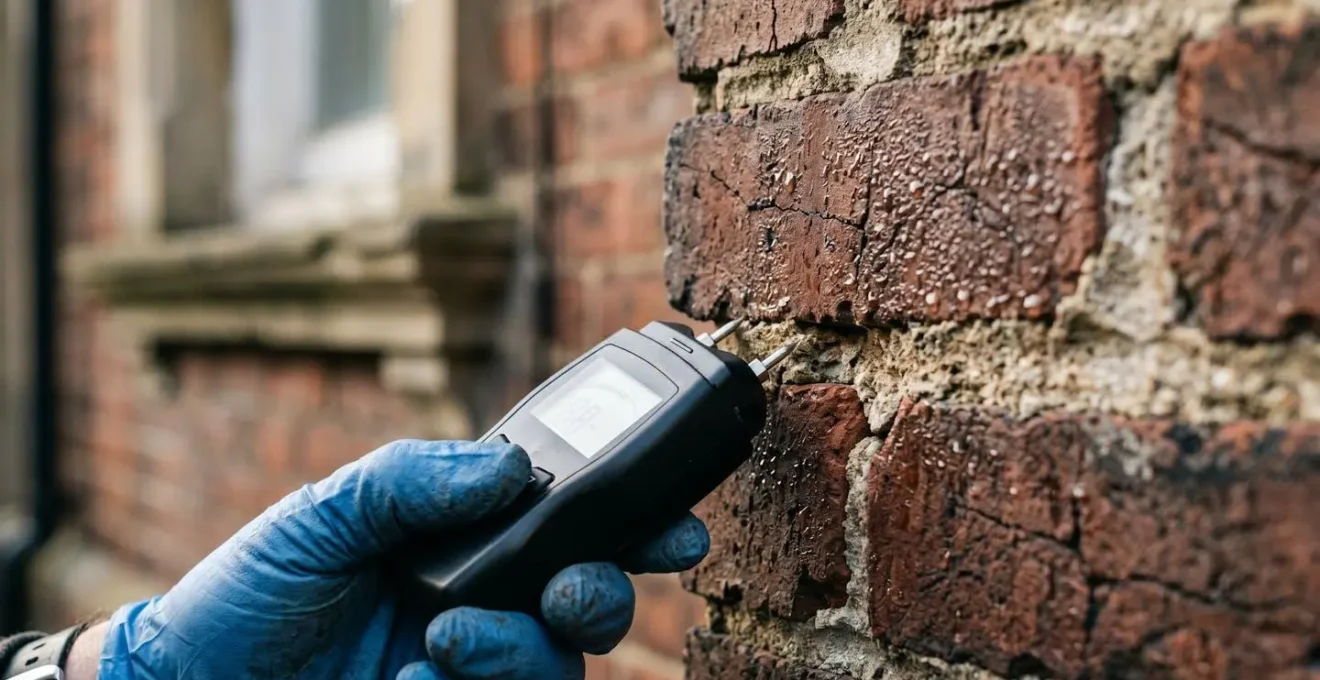
As this image shows, a qualified surveyor uses specialist equipment and expertise to look beyond the cosmetic finish. They investigate the roof structure, check for signs of subsidence or heave (especially critical in areas with clay soil like London and the South East), test for damp, assess the condition of windows and drainage, and identify potentially hazardous materials like asbestos. Opting to save a few hundred pounds by forgoing a proper survey is a classic case of being « penny wise and pound foolish. » The potential cost of undiscovered defects can be astronomical compared to the modest outlay for the survey itself.
The following table starkly illustrates the financial asymmetry. A survey is a minor, one-time cost, whereas the problems it can uncover represent major, ongoing liabilities that can cripple your investment’s profitability. This is the clearest example of the difference between reviewing the « paper » (the valuation) and inspecting the « pavement » (the physical asset).
| Item | Typical Cost Range (£) | Survey Detection |
|---|---|---|
| RICS Level 3 Building Survey | £700 – £1,500 | Comprehensive property inspection |
| Japanese Knotweed Remediation | £5,000 – £25,000+ | Identified in survey |
| Subsidence Repair (London/South East clay soil areas) | £15,000 – £100,000+ | Identified in survey |
| Commercial Unit Roof Replacement | £50,000 – £250,000+ | Condition assessed in survey |
| Damp Remediation (Georgian property) | £3,000 – £15,000 | Identified in survey |
| Post-Grenfell Cladding Remediation | £10,000 – £100,000+ per unit | Flagged in survey |
The survey report provides you with critical leverage. It allows you to either renegotiate the purchase price to account for the repair costs, require the seller to fix the issues before completion, or, in the most severe cases, walk away from a bad investment with your capital intact.
The Title Issue That Makes Your Property Unsellable for 12 Years
The property’s title, as recorded at HM Land Registry, is the legal proof of ownership. However, it is far more than that; it is a historical document riddled with potential « title traps » that can severely restrict the use of your property or even render it unsellable. These are not always obvious and require a meticulous legal eye to uncover. One of the most dangerous is any issue that makes the property un-mortgageable, as this instantly eliminates the vast majority of potential future buyers.
Case Study: The Flying Freehold Mortgage Refusal
A ‘flying freehold’ occurs when part of one property is structurally situated over a part of another property, such as a bedroom over a neighbour’s ground-floor room or a shared passageway. If the title deeds do not contain clearly defined rights of support and detailed covenants for repair, most UK mortgage lenders will refuse to lend. This is due to the legal ambiguity surrounding who is responsible for structural repairs. Without a mortgage, the pool of potential buyers shrinks to cash-only purchasers, making the property effectively ‘unsellable’ in a normal market and drastically reducing its value.
Another historical issue that continues to trap unwary buyers is Chancel Repair Liability. While a 2013 deadline required churches to register their interests, the risk has not been entirely eliminated. Following this deadline, an estimated 250 churches registered notices against more than 12,000 properties. If a property has not been sold since October 2013, an unregistered liability could still be a « financial time bomb » that activates upon transfer to a new owner, creating a sudden and significant financial obligation.
Other title traps include restrictive covenants. This « covenant archaeology » can unearth decades-old rules, such as a prohibition on using the property for « trade or business, » which could technically prevent modern work-from-home arrangements. Removing such a covenant is a costly and lengthy process through the Upper Tribunal, with no guarantee of success. These are not mere legal curiosities; they are enforceable restrictions that directly impact your ability to use and enjoy your property, and ultimately, your ability to sell it.
How Long Should Due Diligence Take for a £1M+ Commercial Property?
A common point of friction in property transactions is the timeline. Sellers want a quick sale, while buyers need time to conduct a thorough investigation. For a high-value commercial property (e.g., £1M+), a rushed due diligence process is a significant risk. A realistic timeline is essential to allow for detailed legal reviews, specialist surveys, and the raising of detailed enquiries. Rushing this process to meet an arbitrary deadline often means cutting corners and accepting risks blindly. A reasonable and well-managed due diligence period for such an asset typically takes between 8 and 12 weeks.
This timeline is not arbitrary; it is dictated by the sequential nature of the investigative process and reliance on third parties, most notably local authorities, whose response times for searches can vary dramatically. The process involves multiple parallel streams of work managed by your legal and technical teams. It’s a structured investigation that moves from broad reviews to specific enquiries based on the findings at each stage. Since 1990, the process has been anchored in a system of registered land, which provides a framework but doesn’t eliminate the need for scrutiny.
The majority of land in England and Wales is registered. Since 1 April 1990 it has been compulsory to register land in England and Wales following any sale.
– DLA Piper, Due diligence in UK – England and Wales
Here is a typical breakdown of the critical path:
- Week 1: Instruct solicitors and surveyors. Local Authority searches are submitted immediately as they are often the biggest bottleneck.
- Weeks 2-4: While waiting for search results, the legal team reviews title documents and lease agreements. The physical building survey is conducted.
- Weeks 3-5: The building survey report is delivered. If it flags red flags (e.g., potential contamination, structural issues), specialist surveys are now commissioned.
- Weeks 4-6: Local Authority search results return. The solicitor raises specific enquiries with the seller’s legal team based on the survey and search findings.
- Weeks 6-8: The seller’s responses to enquiries are received and reviewed. This often involves back-and-forth negotiation and requests for further documentation.
- Weeks 8-10: Final negotiations on the purchase price may occur based on issues uncovered. The contract is finalised.
- Weeks 10-12: Exchange of contracts and completion. A final pre-completion search (OS1) is done to freeze the title and ensure no last-minute changes have been made.
Attempting to compress this timeline significantly increases the risk of missing a critical issue. For a multi-million-pound investment, 8 to 12 weeks is not a delay; it’s a necessary period of protection.
How to Search Planning History and Spot Red Flags in 20 Minutes
While much of due diligence requires specialist solicitors and surveyors, investigating a property’s planning history is something a savvy buyer can begin themselves. Every local council in the UK maintains an online planning portal where you can search for past and present applications for a specific property or area. This initial 20-minute search can provide powerful insights and reveal major red flags long before you incur significant professional fees. It’s an essential first step in your forensic investigation.
The goal is not just to see what has been approved, but to understand the property’s story and limitations. Here is a quick guide to navigating a council’s planning portal and spotting trouble:
- Find the Portal: Simply search for « [Council Name] planning portal » (e.g., « Westminster City Council planning portal »).
- Search the Address: Enter the property’s address to bring up a list of all associated planning applications.
- Look for a ‘Pattern of Refusal’: This is a critical red flag. If you see multiple, similar applications for an extension or a loft conversion have been refused over the years, it strongly suggests a fundamental site constraint or a strict local policy that will prevent you from developing the property as you wish, no matter what the seller or agent claims about its « potential. »
- Read the ‘Public Comments’: A high volume of well-reasoned objections from neighbours or local groups on past applications is a sign of a politically sensitive site. Any future plans you have are likely to face organised opposition, complicating and delaying the process.
- Search for ‘Enforcement Notices’: This is the most serious red flag. An enforcement notice indicates that illegal building work was carried out. The local authority has the power to demand the structure be altered or demolished at the current owner’s expense. The liability for this passes to you upon purchase.
This initial « covenant archaeology » of the planning register helps you build a picture of what is and isn’t possible with the property. It also allows you to have a much more informed conversation with your solicitor, directing them to investigate specific areas of concern. It’s a proactive step that puts you in control of the due diligence process from the very beginning.
How to Spot Red Flags in Your Land Registry Title Documents
The Land Registry Title Register, along with its accompanying Title Plan, is the definitive legal record of the property. To the untrained eye, it can appear to be a dry, administrative document. To a forensic investigator, it is a treasure map of potential problems, restrictions, and financial time bombs. Learning to read between the lines is a critical due diligence skill. Your solicitor will conduct this review, but understanding what they are looking for will empower you to ask the right questions.

The document is typically split into three parts. Each part can contain hidden traps for the unwary buyer. The Proprietorship Register (Section B), for example, lists the legal owner but also contains any restrictions on their power to sell. A ‘Form A Restriction’ is a major red flag for a sole buyer, as it indicates another party has a beneficial interest (e.g., under a trust), and a single owner cannot sell the property alone. The Charges Register (Section C) lists mortgages but also other burdens, such as restrictive covenants that could limit your use of the property, or a ‘Unilateral Notice’ which might have been placed by a disgruntled creditor or ex-partner to protect an alleged interest, and which must be resolved before any sale can proceed.
A meticulous review of these documents is paramount to ensure you are acquiring a ‘clean’ title, free from issues that could affect its value or your ability to sell it in the future.
Action Plan: Auditing Your Title Register
- Verify Boundaries & Access: In the Property Register (Section A), check the description and Title Plan against the physical site. Scrutinise any easements or rights of way mentioned in the Charges Register (Section C) for vague language that could be exploited by a neighbour.
- Investigate Ownership Restrictions: In the Proprietorship Register (Section B), immediately flag any ‘Form A Restriction’. This requires a second trustee to be appointed to sell, complicating and delaying any transaction if not handled correctly.
- Analyse the Charges: In the Charges Register (Section C), look beyond the standard mortgage. A ‘Unilateral Notice’ is a serious red flag that must be investigated and removed. Also, check for any ‘Chancel Repair Liability’ notices.
- Conduct Covenant Archaeology: Deeply review all restrictive covenants in the Charges Register. Pre-1950s covenants prohibiting « trade or business » can be problematic for modern work-from-home lives and are costly to remove.
- Confirm Insurable Title: If any historic issues are found (e.g., lack of planning for an old extension, a vague right of way), confirm with your solicitor that a cost-effective indemnity insurance policy can be put in place to protect against future enforcement action.
This systematic approach transforms the title review from a simple check of ownership into a powerful risk mitigation exercise, identifying and neutralising title traps before they can impact your investment.
Key Takeaways
- Due diligence is not a passive checklist but an active, forensic investigation into a property’s hidden liabilities.
- Standard searches and mortgage valuations offer minimal protection; specialist surveys and deep legal analysis are essential to de-risk an acquisition.
- Uncovering title traps, tenant instability, and physical defects before exchange of contracts provides critical leverage for negotiation or for walking away from a bad deal.
How to Ensure a Clean Title Transfer and Avoid Post-Sale Disputes
The final phase of due diligence, occurring just before the exchange of contracts and completion, is about locking down the findings of your investigation and ensuring no new risks have emerged. This is not the time to relax; it is the time for final verification. The goal is to ensure a « clean » transfer, where all identified issues have been resolved, accounted for, or insured against. This final flurry of activity is what prevents costly and stressful post-completion disputes, which often arise from unverified assumptions or last-minute changes.
One of the most critical steps is the pre-completion OS1 search. This search, conducted at the Land Registry just before completion, provides a priority period (typically 30 business days). It effectively freezes the title register, preventing the seller from registering a new charge or other adverse entry against the property between your exchange and completion. It is your final shield against last-minute seller misconduct or financial distress. Alongside legal checks, a final physical walkthrough of the property the day before completion is crucial to verify that its condition has not changed and that it will be handed over vacant, as agreed.
For any historical irregularities discovered during due diligence, such as an extension built decades ago without formal building regulations sign-off, this is the point to secure solutions. Rather than embarking on a costly retrospective application, a simple ‘Lack of Building Regulations’ indemnity insurance policy can often be obtained for a few hundred pounds. This protects you against future enforcement action from the local authority. Similarly, for issues like potential Chancel Repair Liability, a one-off indemnity premium of as little as £20.00 can provide peace of mind for a risk that, while remote, has catastrophic consequences.
These final checks are the culmination of your entire investigative effort. They ensure that all the issues uncovered are formally addressed in the contract, through price adjustments, warranties, or insurance policies. This meticulous final protocol is what transforms a complex transaction into a secure and clean title transfer.
By adopting this forensic and meticulous approach, you move beyond the standard buyer’s checklist and operate as a sophisticated investor. This ensures you are not just buying a property, but a secure asset free from the hidden financial time bombs that can derail even the most promising acquisition. To begin implementing this strategy, the next logical step is to engage a specialist solicitor and RICS-accredited surveyor to form the core of your investigative team.