
In summary:
- Swap unpredictable, high-cost emergency callouts for cheaper, planned servicing to cut your annual spend significantly.
- Implement a 12-month maintenance calendar to batch tasks, schedule contractors during off-peak times, and turn chaos into a predictable operational rhythm.
- Focus on non-negotiable legal deadlines, like the annual Gas Safety Certificate, to protect your assets, your tenants, and your insurance coverage from being voided.
- Shift your mindset from « fixing problems » to proactive « asset preservation » to reduce tenant turnover and increase your property’s value over time.
The phone rings at 10 PM. It’s a tenant. The boiler is dead, the house is cold, and you can already feel the familiar dread of finding a contractor for an emergency callout. For many landlords, this reactive, stressful cycle of repair feels inevitable. The common advice is often a fragmented list of chores: « service the boiler, » « clean the gutters, » « check for leaks. » While these tasks are important, they are often treated as isolated events, not as components of a cohesive strategy.
But what if the goal wasn’t just to fix things, but to build a system that makes emergencies the rare exception, not the rule? The solution isn’t a longer to-do list; it’s a smarter financial strategy. It’s about transforming unpredictable, high-cost crises into manageable, budgeted operational expenses. This approach involves understanding the true cost of inaction—the accumulating maintenance debt that turns small issues into catastrophic failures—and establishing an operational rhythm that protects both your property and your profits.
This guide provides a systematic framework to do just that. We will move beyond the simple checklist to build a comprehensive maintenance schedule that acts as a business plan for your property portfolio, designed to prevent the vast majority of emergency calls and regain control over your time and finances.
To help you transition from a reactive to a proactive landlord, this article breaks down the essential components of a strategic maintenance plan. The following sections provide a clear roadmap for building a system that saves you money, time, and stress.
Summary: How to Create a Maintenance Schedule That Prevents 80% of Emergency Repairs?
- Why Emergency Boiler Repairs Cost Triple Compared to Annual Servicing?
- How to Create a 12-Month Maintenance Calendar for Multiple Properties?
- Retained Contractor or Pay-Per-Job: Which Saves Money for 5+ Properties?
- The Gas Safety Delay That Invalidates Your Insurance Coverage
- When to Schedule Gutter Cleaning and Boiler Services for Maximum Protection?
- The Maintenance Shortcut That Turns a £500 Fix Into £5,000
- Why Waiting for Problems Triples Your Maintenance Spending?
- How to Handle Day-to-Day Property Management Without Burning Out?
Why Emergency Boiler Repairs Cost Triple Compared to Annual Servicing?
The difference between proactive and reactive maintenance is never clearer than with a boiler breakdown. A planned annual service is a predictable, low-cost event. An emergency callout is a financial shock. UK data shows that while a standard annual service might cost between £80-£120, an emergency call-out can reach £450 or more. This price hike isn’t just about paying a premium; it’s a cost cascade that includes after-hours labour rates, the inflated price of rush-shipped parts, and the potential for secondary damage if the issue isn’t contained quickly.
This principle isn’t unique to boilers. Research from the U.S. Department of Energy confirms that a purely reactive maintenance approach—waiting for things to break—can be three to four times more expensive than a planned, preventative one. The logic is simple: planned work happens on your schedule, during business hours, with contractors you’ve chosen at a pre-agreed price. Emergency work happens on the problem’s schedule, often at the worst possible time and with severely limited, and therefore expensive, options.
Viewing maintenance through this financial lens is the first step. You are not just « servicing a boiler »; you are making a strategic decision to invest a small, predictable amount to prevent a large, unpredictable expense. It’s the difference between controlling your costs and letting them control you.
How to Create a 12-Month Maintenance Calendar for Multiple Properties?
A maintenance calendar is the primary tool for translating strategy into action. It moves you from a state of constant reaction to a controlled operational rhythm. Instead of relying on memory or waiting for a tenant’s call, you have a master plan for the entire year, for every property in your portfolio. This system allows for intelligent task-batching—for instance, scheduling a contractor to service boilers at three neighbouring properties in a single day, saving on travel time and potentially securing a bulk discount. It also provides the foresight needed for effective financial planning.

Creating this calendar doesn’t have to be complex. Start with a simple digital spreadsheet or a dedicated property management app. The key is to structure it logically, breaking down tasks by property, system (e.g., HVAC, plumbing, electrical), and frequency (monthly, quarterly, annually). This organised approach ensures nothing falls through the cracks and transforms overwhelming responsibilities into a series of manageable, scheduled actions. It turns the abstract goal of « being proactive » into a concrete, actionable plan.
Your 5-Step Audit to Build a Maintenance Calendar
- Map Your Year: Create a digital calendar or spreadsheet. Block out key seasonal and legal deadlines (e.g., Gas Safety check dates) for each property first.
- Categorise & Prioritise: Group tasks by system (Plumbing, Electrical, HVAC, Exterior, Safety). Assign a priority level: Level 1 for legal/safety critical, Level 2 for asset preservation, Level 3 for cosmetic.
- Plot End-of-Life: For major components like boilers, roofs, and windows, research their expected lifespan. Mark the target replacement year on your calendar far in advance to turn a surprise expense into a planned, budgeted capital project.
- Schedule Digital Reminders: Use your calendar or a task management app to set reminders 1-2 months before a major task is due. This gives you ample time to book trusted contractors before they get busy.
- Review and Refine: Your calendar is a living document. At the end of each year, review what worked, what didn’t, and adjust the schedule for the following year based on your real-world experience and costs.
Retained Contractor or Pay-Per-Job: Which Saves Money for 5+ Properties?
As your property portfolio grows, the question of how to manage tradespeople becomes more complex. For a landlord with one or two properties, a pay-per-job model with a list of trusted contacts makes perfect sense. However, once you manage five or more properties, the calculus changes. The sheer volume of predictable maintenance tasks—from annual gas safety checks to seasonal gutter cleaning—starts to create a consistent workflow. At this stage, a retained contractor model can shift from a perceived luxury to a sound financial decision.
A retainer isn’t just about paying for priority access; it’s about building a partnership. A contractor who is guaranteed your business has an incentive to understand your properties intimately, work efficiently, and offer more competitive pricing on the predictable volume you provide. This model helps smooth out your expenditure from volatile peaks and troughs into a more consistent, predictable operational cost. The key is to analyse whether the guaranteed service, reduced emergency fees, and efficiency gains outweigh the upfront retainer cost. The following comparison breaks down the core trade-offs.
| Model | Upfront Cost | Emergency Call-Out Fee | Priority Access | Best For |
|---|---|---|---|---|
| Pay-Per-Job | £0 | £100-£450 | Back of queue during high demand | 1-3 properties, low maintenance needs |
| Retained Contractor | Annual retainer (varies) | Reduced or included | Front-of-line guaranteed service | 5+ properties, predictable scheduling |
| Hybrid Model | Specialist retainer only | Mixed (reduced for critical systems) | Priority for critical systems only | Portfolio with mixed property types |
Ultimately, the decision depends on the size, age, and geographical concentration of your portfolio. For a landlord tired of being at the back of the queue during a cold snap, the guaranteed priority access offered by a retainer can be worth its weight in gold, preventing small issues from escalating while you wait for a call back.
The Gas Safety Delay That Invalidates Your Insurance Coverage
In the UK, the annual Gas Safety Certificate (CP12) is more than a box-ticking exercise; it is a non-negotiable legal obligation. Failing to comply not only puts tenants at risk but can have devastating financial consequences that go far beyond a potential fine. The most overlooked of these is the impact on your landlord insurance. Insurers operate on the principle that you are upholding your legal duties to maintain a safe property. A failure to do so, such as letting a Gas Safety Certificate lapse, can be seen as a material breach of your policy terms.
This means that in the event of a fire, explosion, or even a carbon monoxide incident originating from a gas appliance, your insurer could argue that your negligence contributed to the event. The terrifying outcome is that your policy could be voided, leaving you personally liable for catastrophic costs, legal fees, and damages. As confirmed by specialists at Total Landlord Insurance, breaching these legal obligations can invalidate your cover entirely.
As Steve Barnes, Head of Broking at Total Landlord Insurance, states with stark clarity:
If you breach your legal obligations as a landlord, you could in turn invalidate your insurance policy and be left to deal with the claim yourself.
– Steve Barnes, Head of Broking, Total Landlord Insurance
This is not a corner to be cut. The date for the annual gas safety check should be the first, immovable entry on your maintenance calendar for every single property. Scheduling it a month in advance ensures you have time to book your preferred Gas Safe registered engineer and provides a buffer for any access issues, ensuring you remain compliant, insured, and protected.
When to Schedule Gutter Cleaning and Boiler Services for Maximum Protection?
Proactive maintenance isn’t just about *what* you do, but *when* you do it. Strategic scheduling leverages seasonal cycles to maximise effectiveness and minimise cost. Two of the most critical seasonal tasks are boiler servicing and gutter cleaning, and their timing is crucial for preventing winter emergencies. Acting during the right season means contractors are more available, parts are in stock, and you are preparing the property for the stresses of the coming weather, rather than reacting to them.

For example, the worst time to find out your boiler needs a new part is during the first cold snap in October, when every engineer in the country is inundated with calls. The best time is in late summer. Similarly, cleaning gutters after the leaves have fallen but before the first frost prevents the formation of ice dams, which can cause severe water damage to the roof and walls. This is not just about ticking boxes; it’s about strategic foresight. A pre-appointment checklist for tenants can also dramatically improve efficiency, ensuring the engineer’s time is spent on the task, not on clearing access.
Here is a list of optimal timings for critical maintenance tasks:
- Boiler Servicing: Schedule in late summer (August/September). Engineers are less busy, and you have ample time to source parts before the winter rush begins.
- Gutter Cleaning: Schedule in late autumn (November). This is typically after most leaves have fallen but before the hard frosts that can create destructive ice dams in clogged gutters.
- Air Conditioning Service: Schedule in early spring (March/April). This ensures systems are running at peak efficiency before the first summer heatwave arrives.
- Exterior Paint/Woodwork: Schedule for dry summer months to ensure proper curing and a durable finish.
- Pipe Insulation: Check and install insulation in early autumn, before the first risk of freezing temperatures.
The Maintenance Shortcut That Turns a £500 Fix Into £5,000
Deferring maintenance is one of the most expensive decisions a landlord can make. It’s a false economy that often starts with a seemingly minor issue: a small leak under a sink, a few cracked roof tiles, or a gutter pulling away from the fascia. The cost to fix it now might be a few hundred pounds. The temptation to « wait and see » is strong. However, this is the start of maintenance debt. Like financial debt, it accrues interest in the form of compounding damage.
That small leak turns into rotten cabinetry, a warped floor, and a mould problem. Those cracked tiles let water into the roof structure, leading to timber decay and damaged ceilings. That faulty gutter directs water down the side of the building, saturating the brickwork and causing damp inside. The initial £500 fix has now morphed into a £5,000+ restoration project. This principle is proven across all industries. One manufacturing plant that implemented a preventive maintenance program saw a 30% reduction in machinery downtime, leading to annual savings of approximately £60,000 in repair costs alone.
The costs are not just structural. Neglected maintenance is a primary driver of tenant dissatisfaction, which leads to higher turnover. A well-maintained property makes tenants feel secure and valued, encouraging them to stay longer. A property riddled with minor, unresolved issues sends a clear message that the landlord doesn’t care, prompting good tenants to leave. Considering that the cost of turning over an apartment can be as much as $5,000 (approx. £4,000) in lost rent, marketing, and repairs, the financial case for keeping tenants happy through diligent maintenance is undeniable.
Key takeaways
- Proactive maintenance is a financial strategy, not a cost center; it transforms unpredictable emergency bills into manageable, budgeted expenses.
- Your 12-month maintenance calendar is the single most powerful tool for taking control, enabling you to batch tasks, schedule efficiently, and plan your budget.
- Legal compliance, especially the annual Gas Safety Certificate, is non-negotiable. It is the bedrock that protects your property, your tenants, and your insurance from being compromised.
Why Waiting for Problems Triples Your Maintenance Spending?
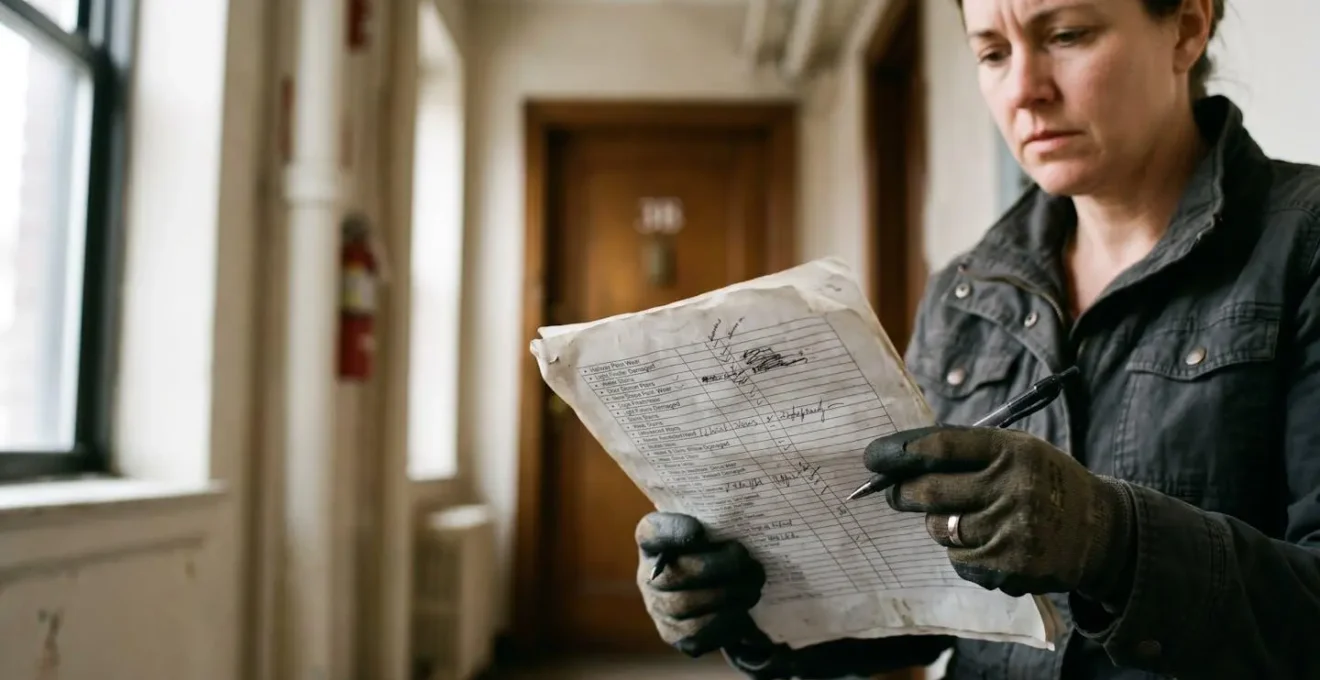
The mindset of « if it ain’t broke, don’t fix it » is a costly philosophy in property management. Every decision to defer or ignore a small maintenance task is a gamble, and the odds are stacked against you. According to Kathleen Kuhn, President of a major home inspection company, an astonishing « 90 percent of the problems we see are the result of deferred or ignored maintenance. » This isn’t bad luck; it’s a predictable outcome of inaction. This accumulation of deferred tasks is known as maintenance debt, and it has a high interest rate.
The financial impact is well-documented. Comprehensive research shows that planned, preventive maintenance saves 12-18% compared to reactive approaches. More strikingly, the same data calculates that waiting for a failure costs 3 to 5 times more than addressing the same issue as part of a planned schedule. Think of a failing bearing in a boiler’s fan. A planned replacement during an annual service is a quick, inexpensive part of a routine job. Waiting for it to fail completely might mean a seized motor, a tenant without heat, an emergency callout, and a much larger bill.
Waiting for problems to manifest is, by definition, a strategy that guarantees you will always be paying the highest possible price for repairs. It cedes all control over timing, cost, and stress to circumstance. A proactive approach reclaims that control, systematically reducing your total maintenance spending over the long term by solving problems when they are small, cheap, and easy to fix.
How to Handle Day-to-Day Property Management Without Burning Out?
A proactive maintenance schedule is the antidote to landlord burnout. Burnout doesn’t come from the work itself, but from the feeling of being constantly out of control—pulled from one crisis to another. A systematic approach, built around a maintenance calendar, restores that control. However, a system needs tools and processes to function without consuming all your time. One of the most effective tools is the ‘Property Bible’. This is a central digital folder for each property containing everything you could possibly need: appliance manuals, warranty dates, paint colour codes, contractor details, and a complete maintenance history. It eliminates frantic searches and empowers you to act decisively.
Another key strategy is to turn your tenants from simple problem-reporters into empowered first responders. A detailed welcome pack that includes a « What To Do If… » guide (how to reset the boiler, locate the stopcock, change a fuse) can resolve dozens of minor issues without you ever receiving a call. It sets a collaborative tone from day one. Finally, you must protect your own time. Schedule recurring, non-negotiable « deep work » sessions in your diary to focus solely on proactive management: reviewing your calendar, analysing expenses, and planning ahead. This prevents the urgent from constantly overwhelming the important.
This systematic approach does more than just save you money on repairs; it actively increases the value of your primary asset. Research has shown that consistent property maintenance can enhance a property’s value by approximately 1 percent annually. It’s a powerful reminder that every well-planned action you take is a direct investment in your financial future.
The first step to escaping the reactive cycle is to start planning. Use the frameworks in this guide to build your first 12-month maintenance calendar today and turn your portfolio into a predictable, profitable asset.