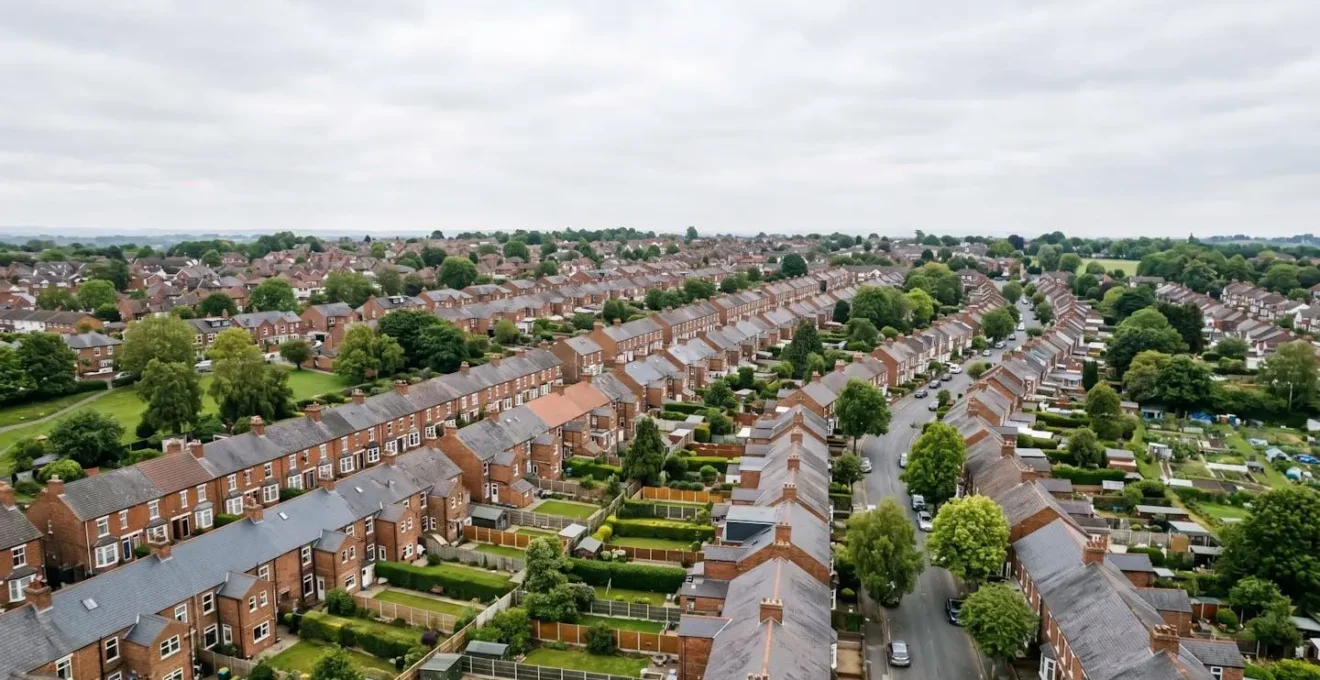
True long-term property wealth is built by identifying structural catalysts that predetermine an area’s growth trajectory, not by chasing short-term market trends.
- Major infrastructure projects consistently pre-empt significant value uplifts, offering predictable growth opportunities.
- Demographic shifts, particularly an influx of young professionals, create sustained rental demand and a future buyer pool.
- Strategic renovations that add functional space unlock value far more effectively than purely cosmetic upgrades.
Recommendation: Shift your investment focus from « what » is happening in the market now to « why » and « where » growth will occur in the next 5-10 years.
For the patient investor, the UK property market is not a platform for quick wins but a vehicle for profound, multi-decade capital compounding. The common narrative often revolves around simplistic advice: buy in a good area, add an extension, and wait. While not incorrect, this view barely scratches the surface and misses the powerful, underlying forces that separate average returns from exceptional wealth creation. It overlooks the fact that a « good area » is not a static label but a dynamic state, constantly being reshaped by deeper economic and social currents.
The conventional wisdom focuses on immediate, visible attributes like school catchment areas or a fresh coat of paint. However, the most astute investors look beyond this. They analyse the less obvious but far more potent drivers of long-term appreciation. These are the structural catalysts that can turn a stagnant postcode into a thriving hotspot over a decade or more. They understand that real growth isn’t just about owning property; it’s about owning property in the path of progress.
But what if the key to accelerating 20-year growth wasn’t just about buying and holding, but about strategically positioning a portfolio to ride the waves of predictable change? This guide moves beyond the platitudes to uncover the economic mechanics of long-term appreciation. We will deconstruct the core catalysts—from the ripple effect of infrastructure to the gravitational pull of demographics—that truly determine a property’s appreciation trajectory. By understanding these forces, you can learn not just to participate in the market, but to anticipate its next moves.
To navigate these complex dynamics, this analysis breaks down the key strategic levers for long-term growth. The following sections explore how to identify the factors that will drive tomorrow’s property values, providing a clear roadmap for the forward-looking investor.
Summary: A Strategic Guide to Accelerating UK Property Growth
- Why Choosing the Wrong Postcode Costs You £200k in Lost Appreciation?
- How to Spot Infrastructure Projects That Boost Property Values by 30%?
- Victorian Terrace or New Build: Which Appreciates Faster Over 15 Years?
- The £50k Renovation That Added Only £20k to Property Value
- When to Buy for Maximum Appreciation: Reading UK Property Cycles?
- Why a New Train Line Announcement Adds 10% to Nearby Property Values?
- Why Areas With Rising 25-34 Population Need More Rental Stock?
- How to Spot the Next Birmingham or Manchester Before Prices Surge?
Why Choosing the Wrong Postcode Costs You £200k in Lost Appreciation?
The adage « location, location, location » is often interpreted as a static rule, yet the value of a postcode is highly dynamic. Over a 20-year investment horizon, the difference between a stagnating area and one undergoing strategic transformation can amount to hundreds of thousands of pounds in lost capital appreciation. The UK property market is not monolithic; it’s a patchwork of micro-markets, each with its own growth trajectory. For example, while London may slow, other regions can surge, as evidenced by Land Registry figures showing a 7.5% annual increase in Northern Ireland’s property prices, leading all UK regions at one point.
This variance isn’t random. It’s driven by structural catalysts like targeted regeneration and corporate investment, which fundamentally alter a postcode’s economic prospects and desirability. Choosing the right location is therefore not about picking an already-expensive area, but about identifying where the next wave of value is heading. An investor who bought in an overlooked postcode ten years ago that has since benefited from major investment will have seen their capital compound at a far greater rate than one who bought in a « safe » but stagnant prime area.
The key is to analyse a location for its future potential, not just its present status. The financial cost of selecting a « sleepy » postcode with no growth drivers is the immense opportunity cost of missed compounding. Over two decades, this can be the defining factor between a moderately successful investment and one that generates life-changing wealth.
Case Study: The MediaCityUK Transformation
The development of MediaCityUK in Salford Quays is a prime example of how a single, large-scale investment can redefine a postcode. The area was transformed into a major hub for media giants like the BBC and ITV. This project acted as a powerful catalyst, attracting a cascade of businesses, highly-skilled professionals, and students. Consequently, the demand for housing soared, significantly boosting property values in surrounding neighbourhoods and demonstrating how infrastructure and corporate relocation directly fuel property appreciation.
How to Spot Infrastructure Projects That Boost Property Values by 30%?
While many investors react to market trends, the most strategic players engage in « infrastructure arbitrage »—the practice of investing in areas where major transport or regeneration projects are announced but not yet completed. These projects are one of the most reliable leading indicators of future property value uplift. They don’t just improve convenience; they signal long-term economic commitment to an area, attracting businesses, jobs, and a new influx of residents. This creates a virtuous cycle of demand that can drive property values up significantly long before the project is even finished.
The impact is not subtle. Research from Transport for London regarding the Jubilee line extension attributed a more than 50% average uplift in residential property values within a 10-minute walk of the new stations. This demonstrates the immense potential for capital growth by positioning investments ahead of the curve. The key is to monitor government infrastructure pipelines, local council planning portals, and announcements from bodies like National Highways and Network Rail. The goal is to identify the « ripple effect » zones—areas that will benefit from improved connectivity and accessibility.
To visualise this, consider the infrastructure as the centre of a pond. The value uplift is strongest at the epicentre (e.g., next to a new station) and radiates outwards, diminishing with distance. Spotting these projects early allows an investor to acquire assets before this value wave is priced in by the wider market, capturing the lion’s share of the appreciation.

As this representation suggests, the proximity to new transport hubs is a critical factor in the scale of appreciation. An investor’s ability to analyse these development zones and act decisively is what separates a passive investment from a strategic, high-growth one.
Victorian Terrace or New Build: Which Appreciates Faster Over 15 Years?
The debate between period properties and new builds is a classic one for investors, but when viewed through a 15-year appreciation lens, the dynamics become clearer. New builds offer initial convenience, higher energy efficiency, and lower immediate maintenance. However, their value is often benchmarked against other identical units in the same development, which can cap their short-term appreciation potential. They lack the scarcity and « value-acreage » potential that characterises many older homes.
Victorian terraces, in contrast, often possess inherent scarcity, architectural character, and, most importantly, the potential for significant value enhancement. While they may require more initial upkeep, research from English Heritage has shown that they can be up to 60% cheaper to buy and maintain over the long term than often perceived, especially if structurally sound. Their true power lies in the ability to be reconfigured and extended. A well-executed loft conversion or side-return extension doesn’t just add square footage; it transforms the way the home is used, creating the open-plan living spaces that modern buyers demand.
This potential for strategic renovation allows an investor to actively force appreciation, rather than passively waiting for the market to lift all boats. Over a 15-year period, a new build may appreciate in line with the general market, but a Victorian terrace that has been intelligently updated can significantly outperform it, having benefited from both market uplift and the value created through renovation.
Case Study: Unlocking £200k in a Victorian Terrace
A prime example of this principle in action involved a contemporary side-return extension added to a Victorian end-terrace. The project incorporated modern features like a vaulted ceiling, a large frameless rooflight, and bi-fold doors to create a seamless indoor-outdoor living space. Post-renovation, an estate agent valued the property at £200,000 more than its pre-extension price, describing it as « one of the best of its type » on the market. This illustrates how unlocking the latent potential in period properties can generate substantial capital growth beyond general market trends.
The £50k Renovation That Added Only £20k to Property Value
Not all renovation spending translates into equivalent property value. This is one of the most common and costly mistakes investors make. A £50,000 investment in a high-end kitchen with bespoke Italian marble might feel luxurious, but if it’s in a property whose ceiling price is limited by its postcode or size, it may only add £20,000 in the eyes of a surveyor or buyer. This negative return on investment occurs when spending is driven by personal taste rather than a strategic understanding of what creates market value.
The most successful renovations are those that focus on increasing functional space or fixing fundamental structural issues, rather than purely cosmetic upgrades. Projects like loft conversions or ground-floor extensions that add a bedroom or create a highly desirable open-plan kitchen-diner typically offer the highest ROI. These changes alter the property’s core specifications and appeal to a broader range of buyers. In contrast, overly personalised or « gold-plated » finishes rarely recoup their cost.
Therefore, a renovation budget must be treated as a capital investment, not a personal expense. Before commencing any work, an investor must analyse the ceiling value for similar-sized, renovated properties in the immediate area. The goal is to ensure that the total acquisition cost plus renovation spend remains comfortably below this ceiling, locking in a profit margin. Ignoring this fundamental analysis is a fast track to value destruction.

The materials and craftsmanship are only one part of the equation. Without a clear strategy aligned with market demand, even the highest quality work can fail to deliver a positive financial return.
Your Action Plan: The Strategic Renovation Framework
- Structural Audit: Get a full structural survey before purchasing to identify hidden costs for essentials like damp proofing, plumbing, electrics, and roof condition.
- Prioritise Systems: Allocate budget to unglamorous structural work and building systems (heating, wiring) first, as these consume the majority of funds and are critical for a property’s health.
- Focus on Space: Prioritise extensions that create high-demand spaces like open-plan kitchen-diners with bi-fold doors, as these have a greater impact on value than cosmetic upgrades.
- Consider Loft Conversions: Evaluate loft conversions as they are often the least expensive extension option and can create a valuable extra bedroom and bathroom.
- Consult Experts: Always engage a structural engineer and architect before removing walls to ensure compliance with building regulations and properly support structural loads.
When to Buy for Maximum Appreciation: Reading UK Property Cycles?
Timing the market perfectly is impossible, but understanding long-term property cycles provides a powerful strategic lens for the patient investor. The UK property market has historically followed a predictable, albeit bumpy, pattern known as the 18-year property cycle. This theory posits that markets move through distinct phases—recovery, boom, peak, and slump—over a roughly two-decade period. For instance, historical data shows an 18-year span between the market peak of 1989 and the next major peak in 2007, just before the global financial crisis.
For a capital appreciation-focused investor, the most opportune time to buy is not during the euphoric « boom » phase, when prices are high and competition is fierce. Instead, the greatest potential for long-term compounding is found during the late slump and early recovery phases. It is during these periods of market pessimism and skepticism that assets are most attractively priced. Buying when others are fearful allows an investor to acquire property at a discount, positioning them to ride the entire wave of the subsequent boom phase, which typically lasts for many years.
Reading the cycle involves looking at macro-economic indicators: interest rate trends, mortgage lending volumes, construction activity, and rental yield compression. When yields are high and sentiment is low, the market is often near its bottom. Conversely, when the media is filled with stories of rapid price growth and lending is easy, the market is likely approaching its peak. As the legendary investor Sir John Templeton noted, this psychological pattern is universal.
Bull markets are born on pessimism, grow on skepticism, peak on optimism and die in euphoria.
– John Templeton, Investment wisdom applied to property cycles
Why a New Train Line Announcement Adds 10% to Nearby Property Values?
The announcement of a new train line or major station upgrade is one of the most powerful and quantifiable catalysts for property appreciation. The immediate impact is not just about a future reduction in commute times; it’s about a fundamental revaluation of an area’s accessibility and its connection to major economic hubs. This enhanced connectivity acts as a magnet for both residents and businesses, triggering a cascade of positive economic effects long before the first train runs. The market begins to « price in » the future benefits from the moment the project gets the green light.
The value uplift can be substantial. For example, comprehensive University of Leeds research found that good rail access can add 14% to a home’s value on average. This premium is a direct reflection of the increased demand from commuters seeking to balance affordability with a manageable journey to work. For a strategic investor, the key is to act on the *announcement* of the infrastructure, not its completion. By the time a new line is operational, much of the initial value uplift has already been captured by those who invested early.
This principle is not just theoretical; it’s playing out across the UK right now. The anticipation of new, faster connections is a powerful driver of investor interest and is a clear signal of where future growth is being channelled.
Case Study: The HS2 Effect
The four new High Speed 2 (HS2) stations at Euston, Old Oak Common, Solihull, and Birmingham Curzon Street are already attracting huge levels of investor interest. These locations are set to benefit from significantly faster journey times, particularly between London and Birmingham. In anticipation, major new housing developments are being built close to the future stations, and house prices in the surrounding regeneration zones are expected to experience strong growth. This demonstrates how forward-looking investors are positioning themselves to capitalise on the wider economic regeneration that large-scale transport projects catalyse.
Why Areas With Rising 25-34 Population Need More Rental Stock?
Demographics are destiny in property investment, and one of the most potent indicators of future demand is an influx of the 25-34 age group. This cohort, often comprising young professionals, graduates, and young families, represents the bedrock of the rental market. They are typically mobile, moving for career opportunities, and are often in the « renting before buying » phase of their lives. An area experiencing a growing population in this demographic is, by definition, an area with rising and sustained demand for rental stock.
This « demographic gravity » creates a highly resilient investment environment. Even during wider economic downturns when the sales market may slow, the rental market in these areas often remains robust or can even strengthen as fewer people are able to buy homes. For a buy-to-let investor focused on long-term growth, this provides a dual benefit: consistent rental income in the short-to-medium term and a built-in pool of future first-time buyers who may eventually purchase properties in the area, supporting long-term capital appreciation.
Identifying these demographic trends involves analysing census data, local authority population forecasts, and tracking which cities are attracting major employers in growth sectors like tech and finance. Cities with strong universities and high graduate retention rates are also prime candidates. Investing where this young, economically active population is moving to is a strategy for aligning a portfolio with a powerful and predictable wave of demand.
Case Study: Manchester’s Demographic Resilience
Cities like Manchester exemplify this principle. With its large student population, high graduate retention rate, and diverse workforce, Manchester has a thriving rental market that remains strong even during market slumps. The constant influx of the 25-34 demographic creates a structural demand for rental properties. This provides an opportunity for buy-to-let investors to capitalise on higher rental yields during downturns, as demand for rentals increases when the sales market is less accessible, proving the resilience that demographic gravity provides.
Key Takeaways
- Location is not static; its value is dynamically shaped by strategic investments in infrastructure and regeneration over time.
- The highest return on investment comes from strategic renovations that add functional space, not from expensive cosmetic upgrades.
- Long-term economic cycles and demographic shifts are far more powerful predictors of growth than short-term market noise.
How to Spot the Next Birmingham or Manchester Before Prices Surge?
Identifying the next major growth city before it becomes a mainstream headline requires a synthesis of all the strategies discussed. The transformations of cities like Birmingham and Manchester were not accidental; they were the result of a confluence of predictable structural catalysts. To spot the « next » such opportunity, investors must move beyond simply looking at current price growth and instead adopt a forward-looking, analytical approach. This means scouting for the early, often subtle, signals of a city on the cusp of a major growth cycle.
The first step is to track the flow of public and private investment into secondary and tertiary cities. Look for significant regeneration projects and new infrastructure announcements before they receive widespread media attention. An upgraded regional airport, a new university campus, or a large corporation establishing a new headquarters are all powerful leading indicators. These investments create jobs, attract talent, and lay the groundwork for a sustained increase in housing demand. The goal is to find areas undergoing regeneration during the « recovery » phase of the property cycle, where long-term growth potential is at its peak.
Secondly, follow the demographic data. Analyse which cities are experiencing a net influx of the critical 25-34-year-old population. A diverse workforce and a growing pool of young professionals are proxies for sustained rental demand and a future generation of homebuyers. As seen in Manchester’s Northern Quarter, regeneration can turn a run-down area into a vibrant hub that attracts exactly this demographic, fuelling steady and long-lasting growth in property values.
Case Study: The Northern Quarter Regeneration
Manchester’s Northern Quarter provides a perfect blueprint. Decades ago, it was a neglected industrial area. Following targeted regeneration investment, it transformed into a thriving hub for creative industries, independent cafes, and unique shops. This revitalisation attracted a steady stream of young professionals and creatives, fuelling consistent demand and leading to sustained growth in property values. The case demonstrates how regeneration acts as a signal of long-term investment, attracting buyers and renters seeking stability and future growth potential.
To build a truly resilient and high-growth property portfolio over a 20-year horizon, your next step is to apply this strategic framework to your own regional analysis and investment criteria.